
In a Loneliness Epidemic, Gen Z Is Proving Theaters Offer What Streaming Can’t

Edited by Rachael Garel
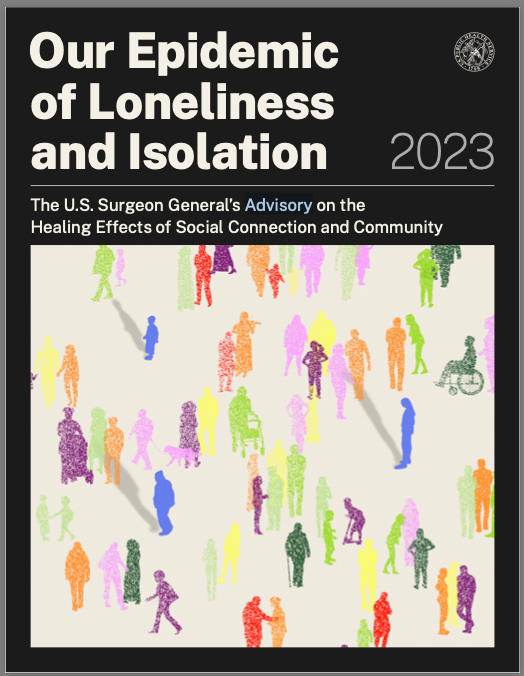
In 2023, the U.S. Surgeon General issued a formal advisory on loneliness and social isolation, warning that a lack of social connection carries health risks comparable to smoking up to 15 cigarettes a day. It was a striking declaration, but not a surprising one. Modern life has become increasingly individualized. Entertainment is personalized. Feeds are personalized. Algorithms are personalized. More and more, culture reaches us one person at a time, through one device at a time, in one carefully tailored stream.
This societal evolution is especially important to remember when considering Gen Z and its relationship with the oldest form of shared screen entertainment: the movie theater.
Gen Z is the generation most often accused of being consumed by phones. They grew up with streaming, social media, short-form video, and unlimited entertainment on demand. Conventional wisdom would point to Gen Z as the audience least likely to leave home for a movie, but the numbers say the opposite is true.
Fandango’s 2026 Moviegoing Trends & Insights Study found that 87% of Gen Z respondents saw at least one movie in theaters in 2025, the highest participation rate of any generation surveyed. The study also found that younger audiences are fueling theatrical momentum by attending more frequently and spending more per visit than older generations. Recent reporting on the study suggests that, for many young moviegoers, the theater is more than a place to watch a film. It is a rare distraction-free environment. It’s a social ritual, and one of the few remaining places where culture is experienced collectively rather than alone.
That should command the industry’s attention. Gen Z is not proving theaters can survive despite the digital age. They are proving theaters matter because of it.
The Last Shared Room
Theaters today face real challenges. They compete with far more than just streaming services. They compete with convenience, fragmented attention spans, algorithm-driven entertainment, and a culture increasingly comfortable experiencing life alone.
Since the pandemic, conversations surrounding theatrical exhibition have largely focused on business models, release windows, premium formats, and whether audiences will continue returning. Of course, those issues matter. But another strategic “why” is coming into focus as the industry creates, positions, and negotiates.
Theaters offer something socially, humanly valuable that at home entertainment cannot.
In a world shaped by isolated digital experiences, movie theaters still give strangers a place to gather physically and react collectively to the same story in real time. Not virtually. Not through comment sections. Not while multitasking on the couch. Together. In the same room. At the same moment.
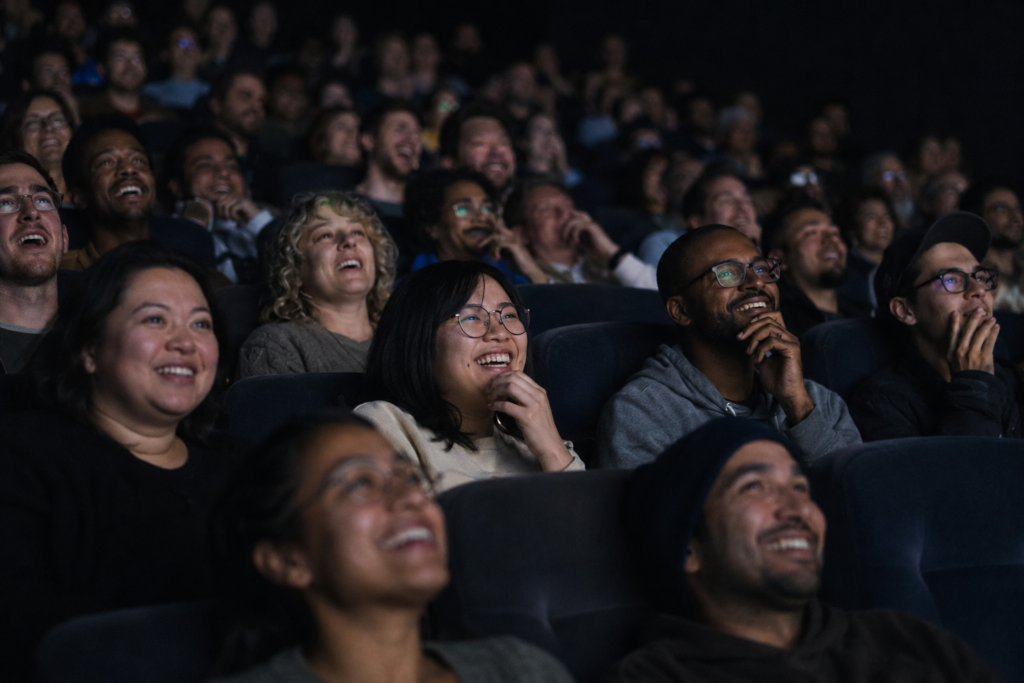
Something deeply human happens when an audience responds in sync. Tension ripples through a theater during a horror film. Laughter spreads through a comedy. Applause erupts at the end of a movie, connecting hundreds of strangers through the same emotional experience. A 2023 study published in Communications Biology helps explain why those moments resonate so strongly. Researchers found that shared experiences can create emotional, physiological, and cognitive alignment between people, strengthening social connection.
For exhibitors and distributors, this is more than a sentimental defense of theatrical exhibition. In a market defined by convenience, theaters provide presence, ritual, and communal energy. As those experiences become rarer, they also become more valuable.
A Generation Searching for Something Tangible
Gen Z’s renewed interest in theaters reflects a broader cultural tension. This is not a generation rejecting technology. Social media remains one of its primary tools for discovering films, discussing them, and generating excitement around them. But discovering culture online does not necessarily mean wanting every meaningful cultural experience to remain there.
Some of Gen Z’s most interesting trends point in the opposite direction. Wired headphones, once dismissed as obsolete, are making a comeback. After five consecutive years of decline, wired headphone revenue grew 3% in 2025 and rose another 20% in the first six weeks of 2026, according to Circana. The trend has been framed as partly practical and partly aesthetic, but it also reflects a broader appetite for experiences that feel physical, intentional, and less frictionless than the latest digital upgrade.
That does not mean every teenager wearing wired earbuds is making a philosophical statement about modern life. Still, the broader cultural pattern is worth noticing. A generation raised on endless scrolling is increasingly drawn to experiences with texture, ritual, and limitations. Experiences that require presence. Experiences that cannot be endlessly paused, skipped, resized, or optimized.
Movie theaters fit naturally into that desire. You commit to a time, a place, a crowd, and a story. For a generation overwhelmed by limitless choice, that commitment may be part of the appeal.
Why Film Prints and Premium Formats Are Resonating
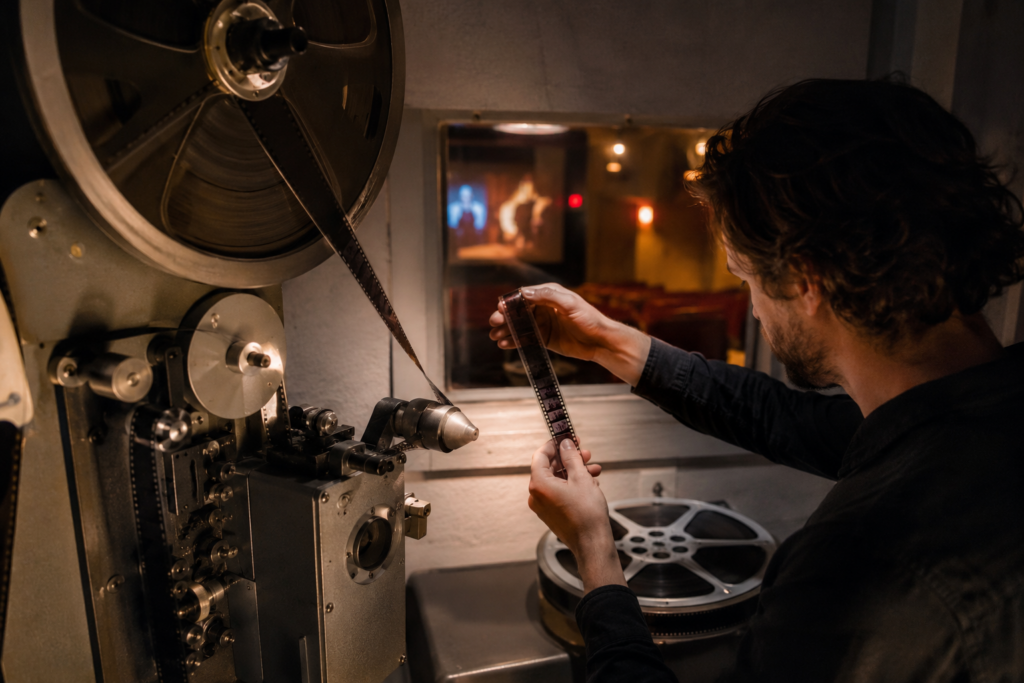
The renewed enthusiasm for physical film formats further illustrates how audiences are gravitating toward theatrical experiences that feel distinct from digital convenience. The 35mm print is no longer just an archival concern or a cinephile obsession. It has become part of the event itself.
At the British Film Institute’s inaugural Film on Film Festival, 8,000 people attended over three days, and 40% of attendees were 34 or younger. Repertory programmers have similarly reported that 35mm screenings particularly attract younger audiences, with Film Forum programmer Bruce Goldstein comparing the phenomenon to vinyl records. In a digital world, the print itself creates a sense of occasion.
That appetite for tangible experiences extends beyond repertory houses. Major contemporary releases are increasingly using rare or revived formats to make theatrical presentation part of the story.
When Format Becomes Part of the Event
Paul Thomas Anderson’s One Battle After Another was shot largely in VistaVision, with cinematographer Michael Bauman estimating that roughly 80% of the film utilized the revived horizontal film format. Warner Bros. promoted the release through VistaVision, 70mm film, and IMAX presentations, making format central to the film’s identity and marketing. The Associated Press reported that the Coolidge Corner Theatre even reconfigured its projection booth to present the film in VistaVision, leading to record attendance.
The response to Dune: Part Three reinforces the point even more dramatically. When initial IMAX 70mm tickets went on sale recently, they sold out almost instantly, even though the film is not scheduled for release until December 2026. That isn’t merely demand for a movie; it’s demand for a specific experience, in a specific format, in a specific room.
For exhibitors and distributors, that distinction matters. Audiences respond not only to stories, but to the conditions in which theaters present them. Format, scarcity, collectability, and the feeling that “this is the definitive way to see it” help transform releases into events. Streaming can provide access. It cannot fully replicate anticipation.
Theatrical Works Best When Audiences Feel Part of Something
The types of films and events audiences increasingly support reinforce the same idea: people want more than passive content consumption. Concert films, anime events, horror openings, anniversary rereleases, fan screenings, premium-format engagements, and alternative programming succeed because they encourage participation.
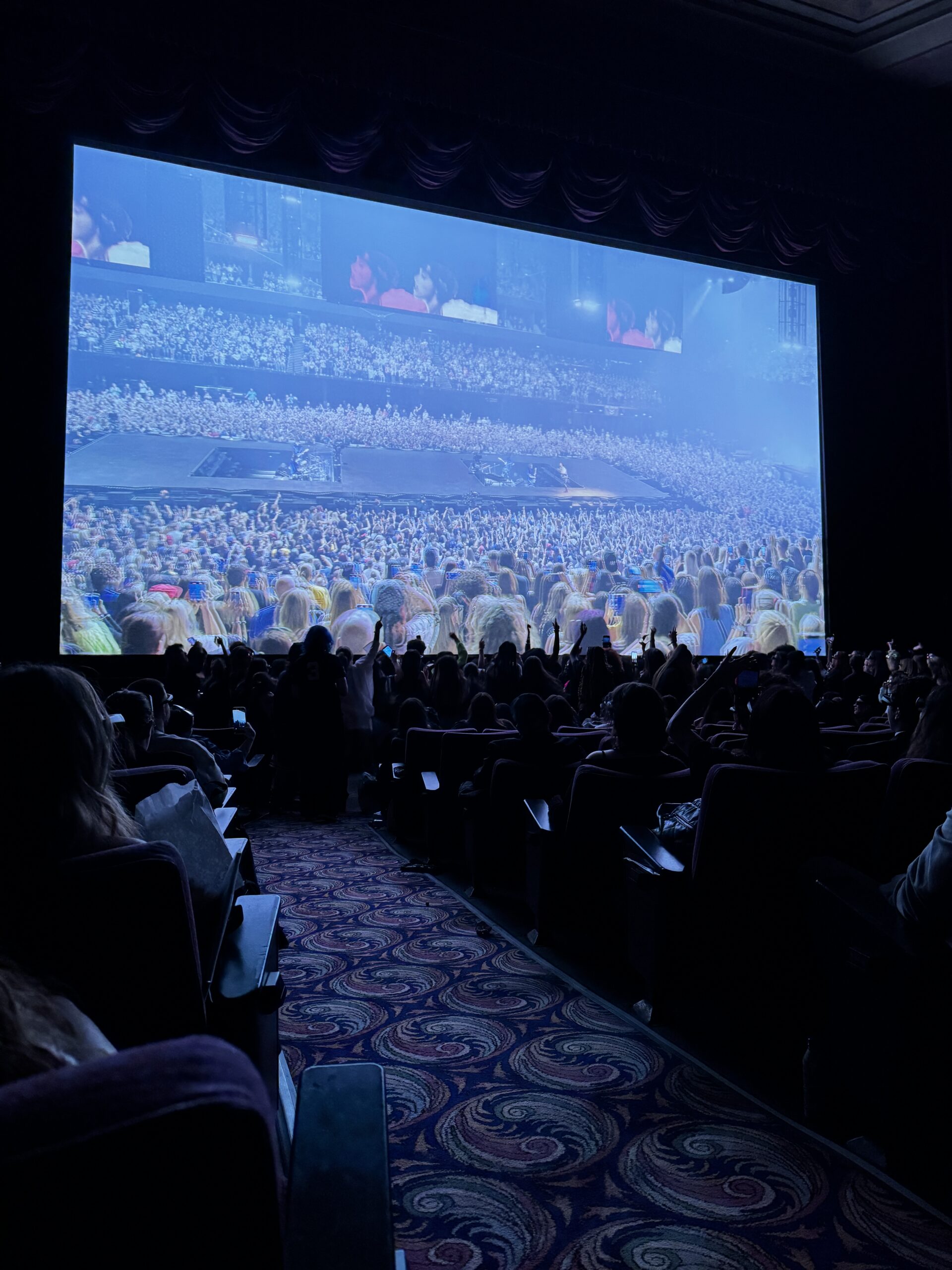
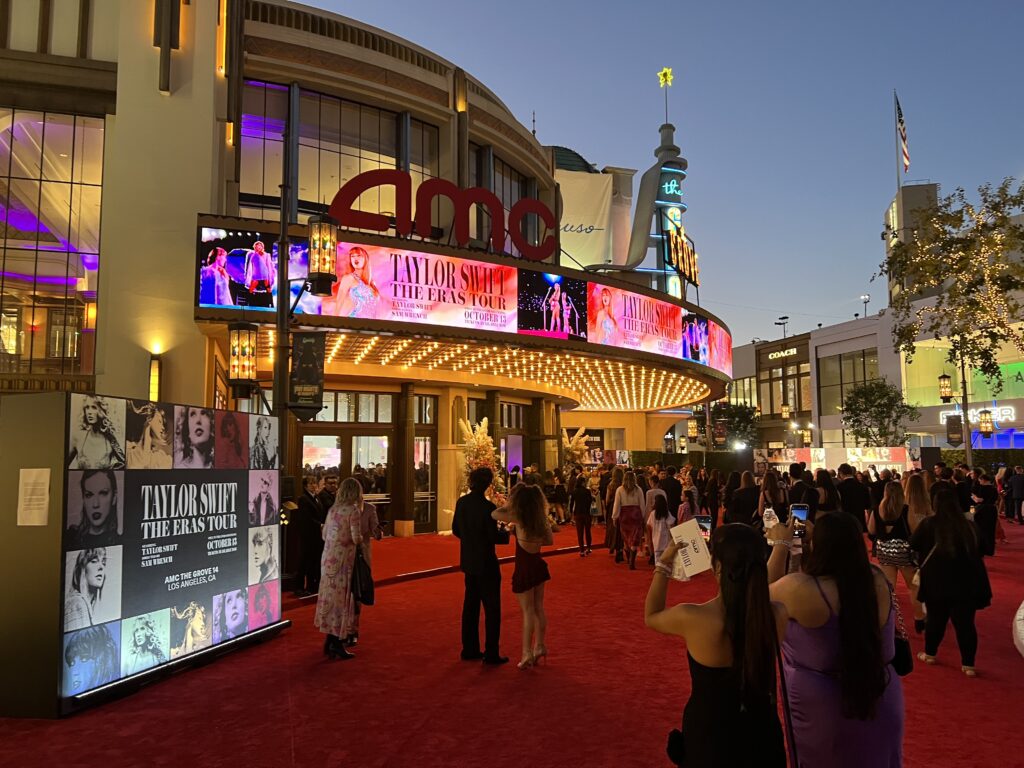
In 2023, Taylor Swift: The Eras Tour became a global theatrical phenomenon not because audiences lacked access to Taylor Swift’s music elsewhere. It was because they wanted to dress up, sing together, react together, and feel part of something larger than themselves. The film grossed more than $261 million worldwide because the auditorium became part of the experience, not merely the place where the experience occurred.
Younger audiences are also transforming older films into live cultural events again. Coraline’s 15th anniversary rerelease grossed more than $53 million globally and became the highest-grossing rerelease in the U.S. in the past decade. Audiences did not simply want access to Coraline; they already had that. They wanted the opportunity to experience it collectively, in a theater, as an event.
Horror remains one of the clearest examples of this dynamic. Fear becomes more entertaining when it moves through a crowd. Anime and K-pop events succeed because fandom becomes community inside the auditorium. Repertory screenings resonate because discovery feels different when shared. Alternative programming works when it gives audiences a reason to attend rather than simply consume.
Audiences are communicating something important to the industry: theatrical experiences are strongest when people feel emotionally invested in the experience itself, not just the title on the screen.
Building Events, Not Just Releases
This shift should reshape how the industry approaches programming, distribution, and marketing. The future of theatrical may depend less on recreating old viewing habits and more on building modern communal experiences around film and entertainment.
Event-driven releases succeed when audiences feel there is something meaningful to join. That energy can come from social conversation, fan engagement, creator participation, community partnerships, event-style marketing, premium presentations, rare-format screenings, and the perception that a release carries genuine cultural momentum.
That same Fandango 2026 study found that Gen Z and Millennials are especially engaged with niche genres and alternative theatrical programming, including anime, concert films, sporting events, television finales and premieres, and rereleases.
For distributors and exhibitors, this represents both a programming strategy and a business opportunity. If audiences consistently reward experiences that create connection, the industry should create more of them.
Convenience and Connection Solve Different Problems
Gen Z grew up online, surrounded by unlimited content, endless entertainment options, and digitally mediated social lives. Yet they continue showing up for experiences that feel alive inside a room full of people.
They are embracing repertory screenings, 35mm prints, premium film formats, communal events, concert films, fan screenings, and alternative programming because those experiences provide something digital feeds cannot. Presence. That isn’t nostalgia. It is a reminder that convenience and connection solve different human needs.
Industry leaders often frame saving theaters as a purely economic mission. But theaters also serve an important public function. They remain one of the last shared rooms we still have.
Gen Z seems to understand that. The industry needs to lean into it, not only because connection is the clearest path to growing market share, but because it is the most important thing theaters have to give right now. For more than a century, audiences have shown up for movie theaters. In this age of digital loneliness, it is our turn to show up for them by giving them experiences worth gathering for.